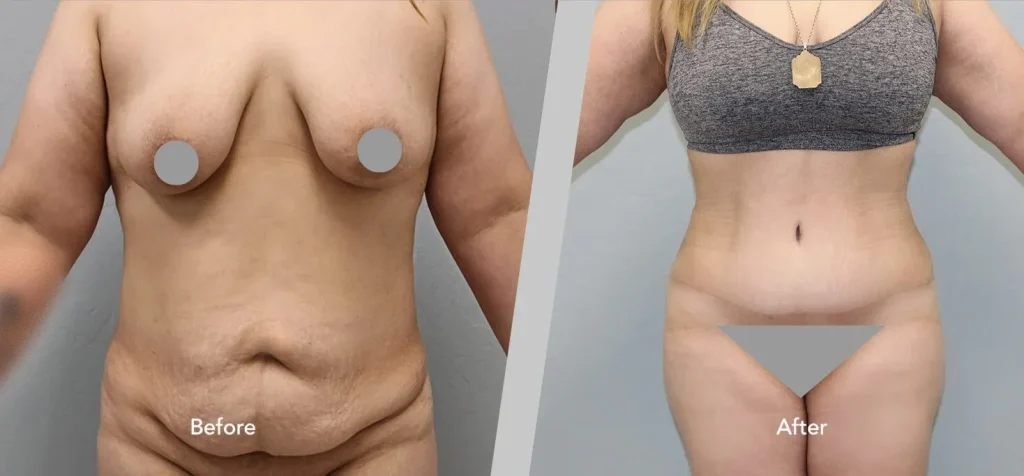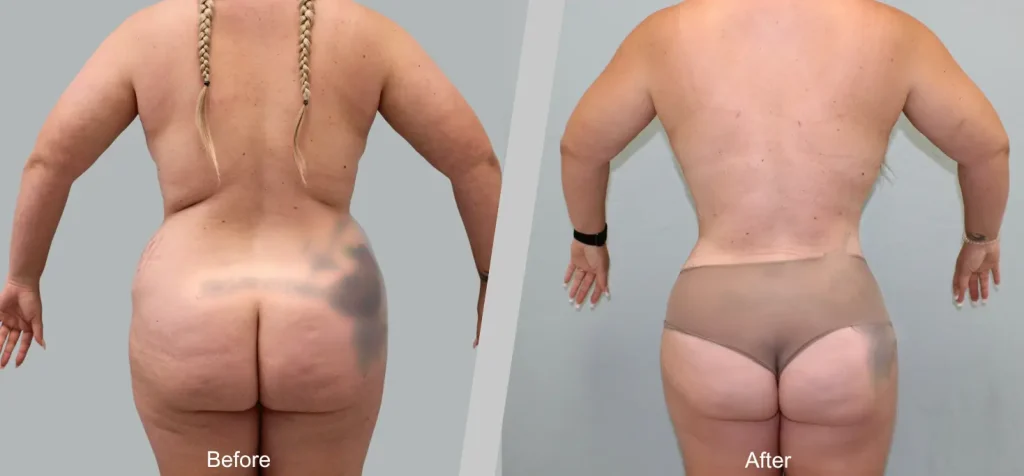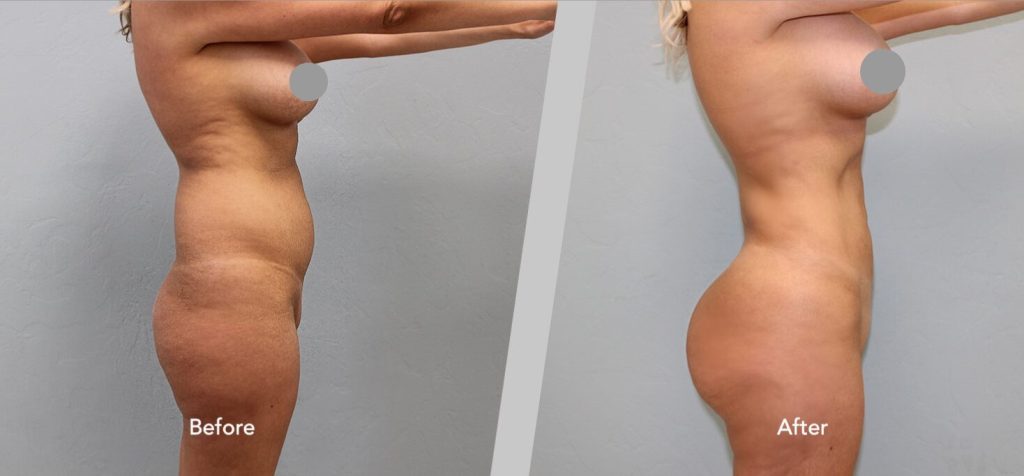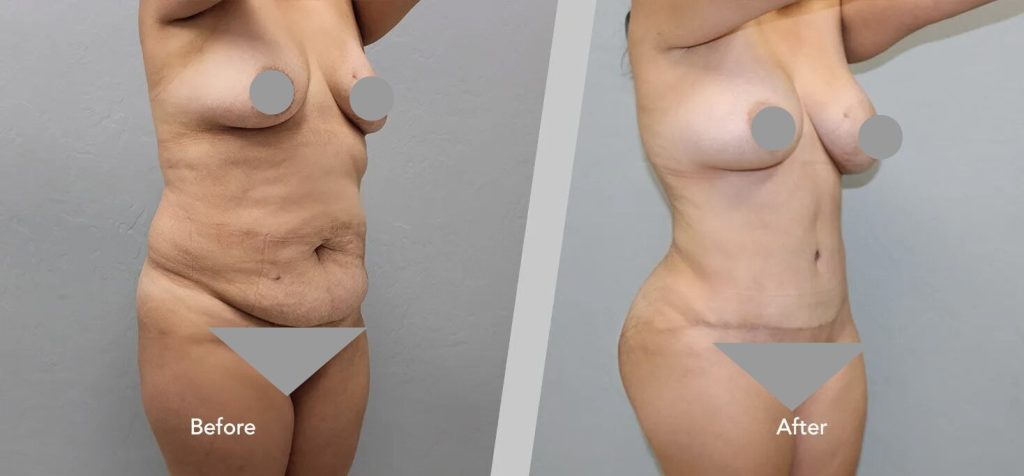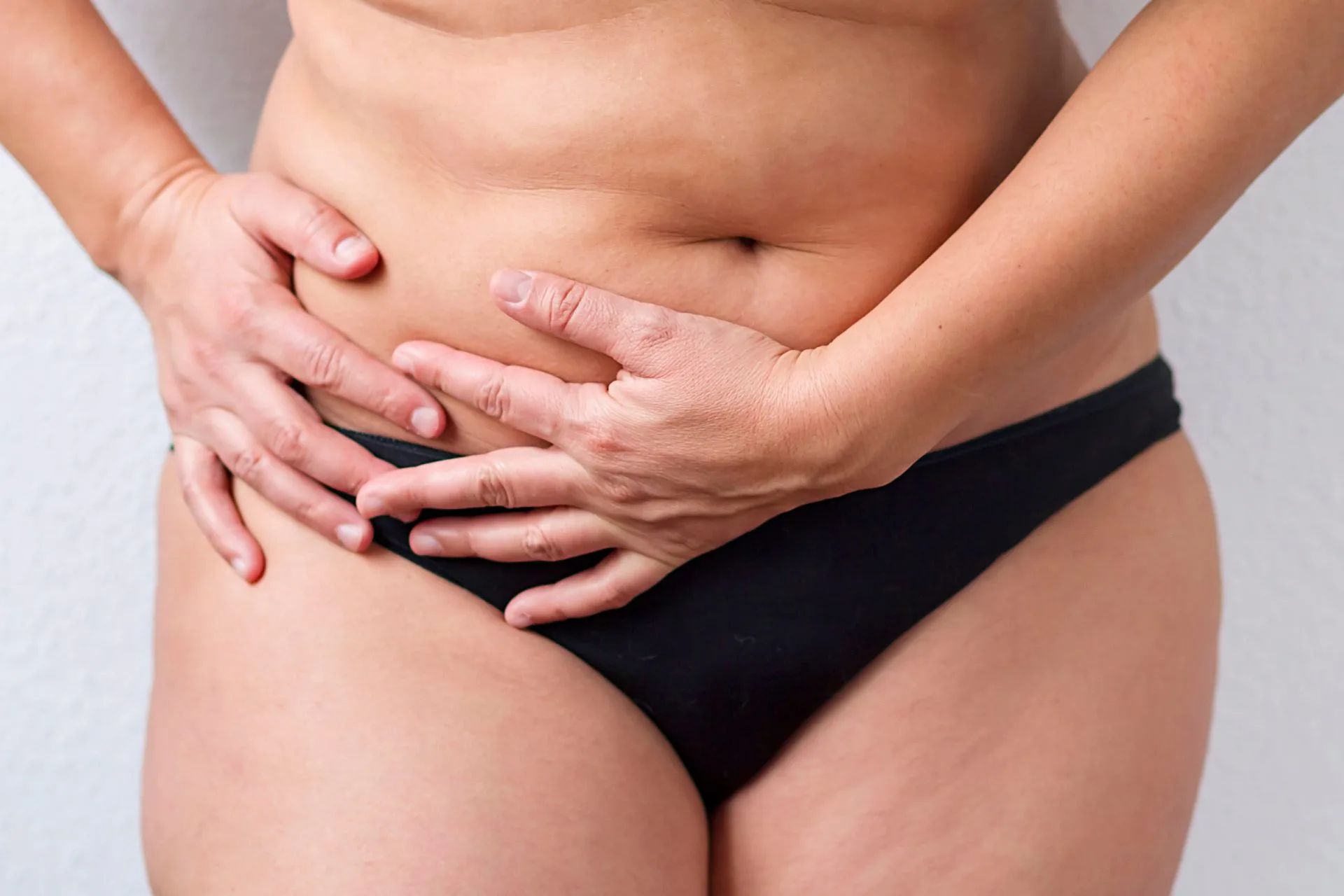
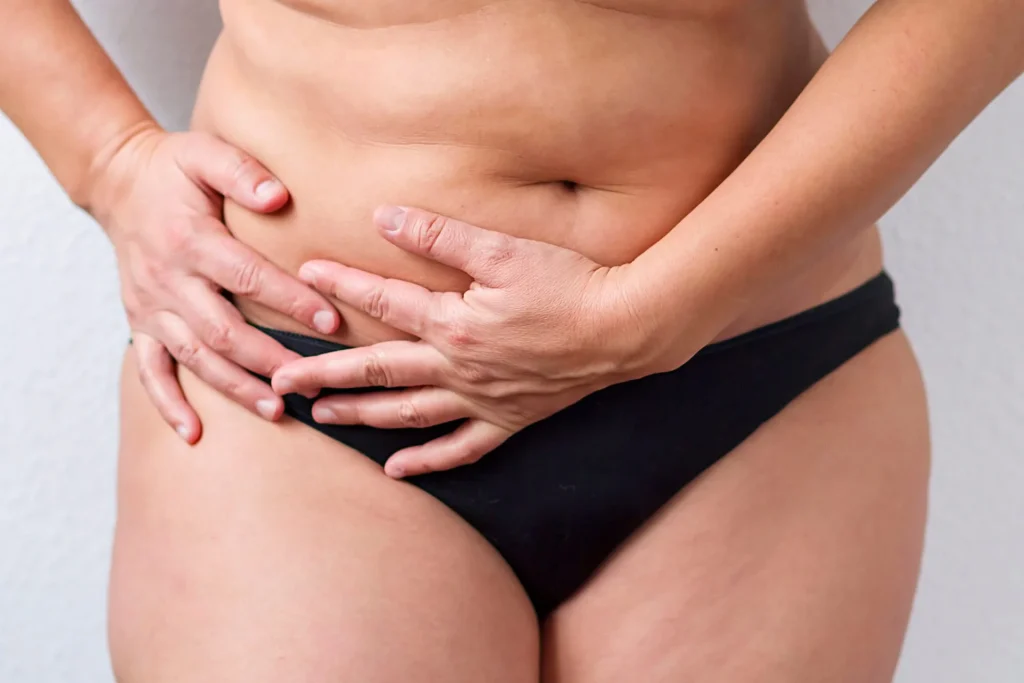
After losing 50 pounds or more, your skin may not bounce back to fit your new physique. This is particularly common following gastric bypass surgery or other weight-loss procedures, where rapid weight loss can leave behind loose skin. Body contouring procedures are specifically designed to remove this excess tissue and create a smoother silhouette that reflects your weight loss achievement.
The key difference between liposuction and body lift procedures lies in what they address. Liposuction is a fat removal technique that suctions out stubborn pockets of fat. A body lift, on the other hand, removes both excess skin and underlying fat while tightening the remaining tissue for a firmer appearance.
Body lift surgery is a comprehensive procedure that targets multiple areas of the body in a single operation. There are several types of body lifts, including lower-body lift, upper-body lift, and total-body lift. A lower body lift typically addresses the abdomen, buttocks, hips, and outer thighs by removing a circumferential band of excess skin and fat around the midsection.
During body lift surgery, your surgeon makes strategic incisions, often around the waistline, to remove the excess tissue. The remaining skin is then pulled taut and secured in its new position, creating a smoother, more contoured appearance. This procedure often combines elements of a tummy tuck (abdominoplasty), a thigh lift, and a buttock lift into a single comprehensive surgery.
Recovery from a body lift is significant, typically requiring 4-6 weeks to return to normal activities and up to three months to resume strenuous exercise. However, the dramatic transformation in body shape often makes this recovery period worthwhile for patients dealing with substantial excess skin.
Liposuction is a less invasive option that focuses solely on removing localized fat deposits. Using a thin tube called a cannula, the surgeon suctions out fat cells from targeted areas, such as the abdomen, thighs, arms, or back. Modern liposuction techniques include traditional suction-assisted liposuction, ultrasound-assisted liposuction, and laser-assisted liposuction.
The ideal candidate for liposuction has relatively good skin elasticity and wants to remove stubborn fat pockets that resist diet and exercise. It’s important to understand that liposuction is not a weight-loss procedure but rather a body sculpting technique. If you have significant loose or hanging skin, liposuction alone will not provide the results you’re seeking and may even worsen the appearance of sagging.
Recovery from liposuction is generally easier than from a body lift, with most patients returning to work within a few days to a week. Compression garments are worn for several weeks to help the skin conform to your new contours.
The fundamental distinction between these procedures comes down to tissue quality and quantity. A body lift addresses both excess skin and fat, making it ideal for post-bariatric surgery patients or anyone with significant skin laxity. Liposuction only removes fat and requires good skin elasticity to achieve attractive results.
Consider the following factors when comparing these options:
Many patients find that their body contouring needs fall somewhere between liposuction and a full body lift. In these cases, a tummy tuck (abdominoplasty) combined with liposuction in other areas might be the perfect solution. A tummy tuck specifically addresses the abdominal area, removing excess skin and tightening the underlying muscles, while liposuction can refine other areas with good skin quality.
This combination approach enables customized body contouring that addresses each area’s specific needs. Your plastic surgeon can create a personalized surgical plan that might include multiple procedures performed either simultaneously or in stages.
Before deciding between these procedures, take time to define your body goals. What specific areas concern you most? Are you bothered by excess fat, loose skin, or both? How much downtime can you realistically accommodate? What are your expectations regarding scarring?
Meeting with a board-certified plastic surgeon who specializes in post-weight-loss body contouring is essential. During your consultation, your surgeon will evaluate your skin quality, remaining fat deposits, muscle tone, and overall health. They’ll discuss your aesthetic goals and help you understand which procedure or combination of procedures will deliver the best option for your unique situation.
Be honest about your medical history, including how you lost weight, how long you’ve maintained your current weight, and any health conditions you have. Surgeons typically recommend waiting at least 6 months after your weight has stabilized before undergoing body contouring procedures.
Choosing between liposuction and a body lift isn’t always straightforward, but understanding the fundamental differences helps you make an informed decision. The right choice depends on your individual anatomy, the extent of your weight loss, your recovery capacity, and your aesthetic goals.
Remember that body contouring after significant weight loss is the final step in your transformation journey. These procedures are designed to help your outer appearance match the incredible work you’ve done to improve your health and wellness. Whether you ultimately choose liposuction, body lift surgery, or a combination of procedures, selecting an experienced, board-certified plastic surgeon is paramount to achieving safe, satisfying results.
The decision between liposuction vs. body lift ultimately depends on your individual needs after weight loss, particularly the extent of sagging skin you’re dealing with. If you’ve experienced significant weight loss and maintained a stable weight for at least six months, you’re ready to explore surgical options that can complete your transformation. While liposuction effectively targets stubborn fat deposits in people with good skin elasticity, a body lift becomes necessary when your surgeon removes excess skin and addresses both excess fat and loose tissue across multiple body areas. Keep in mind that both procedures qualify as major surgery and require careful consideration, proper recovery time, and selection of a qualified plastic surgeon. By understanding your specific body contouring needs and working closely with an experienced professional, you can choose the procedure that will help you achieve the confident, contoured appearance you’ve worked so hard to attain.