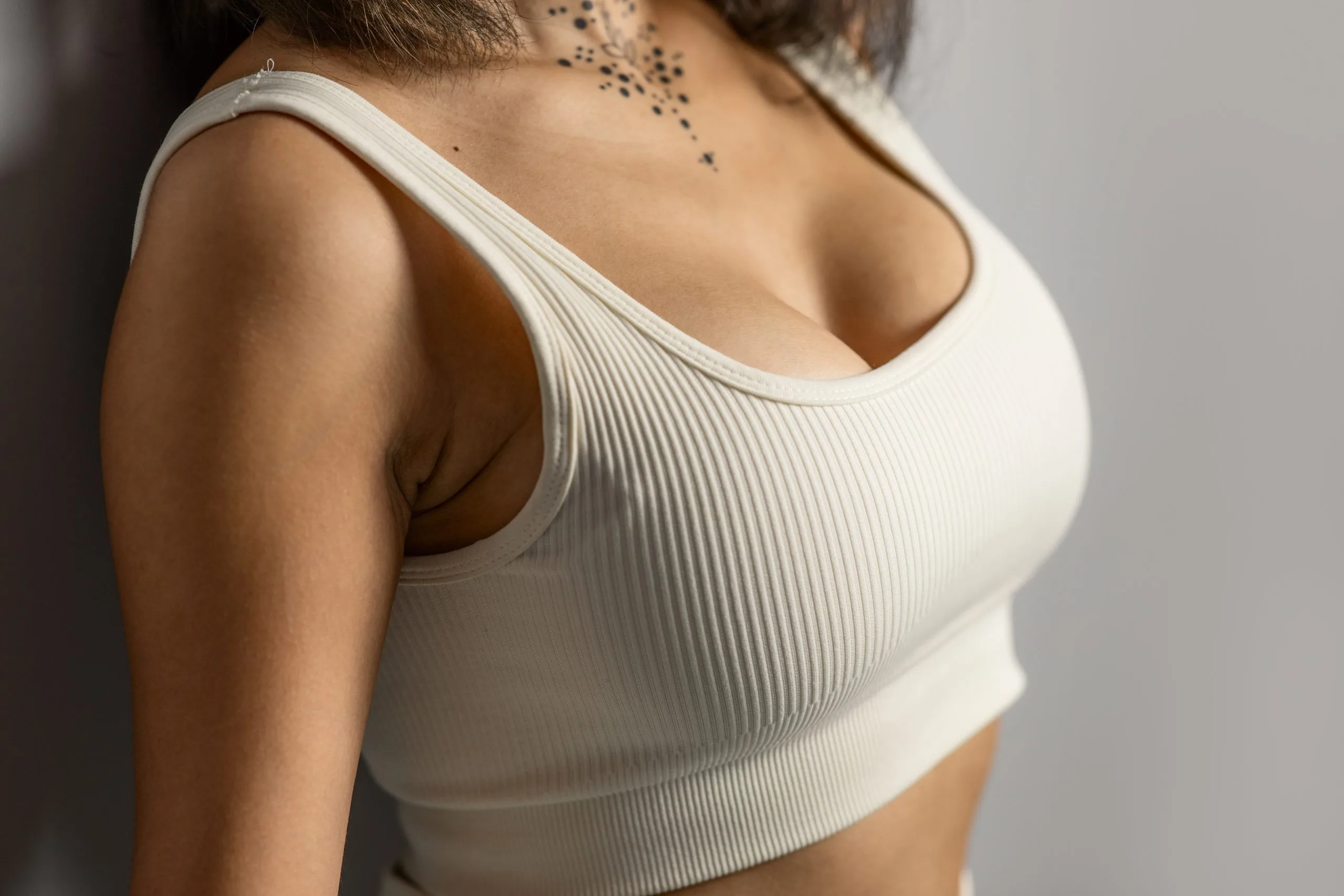
Choosing between a breast lift and a breast lift with implants comes down to the result you want. A lift reshapes and repositions the breast, addressing sagging and excess skin while working with the volume you already have. Adding implants takes the procedure a step further by increasing breast volume and creating more fullness, particularly in the upper breast.
If your main concern is drooping and you are satisfied with your current size, a lift alone may be enough; if your breasts have lost fullness and you want a rounder, fuller profile as well as a higher position, implants may be worth considering.
A breast lift, known medically as a mastopexy, is designed to correct ptosis – the clinical term for sagging breasts. The goal is position and contour, not a larger cup.
A breast lift addresses this by:
Removing excess, stretched skin
Tightening the surrounding tissue to reshape and support the new contour
Repositioning the nipple and areola to a higher, more centered, more youthful spot on the mound
Making a stretched areola smaller so it matches the new breast shape
A mastopexy works only with the tissue you already have. It does not add lasting fullness or significantly change size. If your tissue is thin or you have already lost volume, a lift can make the breast look perkier and tighter without making it look fuller.
A lift with implants combines that same lift with implant placement in a single surgery. This is used when the breasts are small, have lost volume, or you want more size along with a higher position.
This dual-action approach is ideal when breasts feel “deflated,” especially in the upper pole:
The lift tightens the skin envelope and places the nipple on the fuller mound
The implant restores or adds projection, volume, and upper-pole fullness
One surgery addresses both sagging and deflation
A lift changes the skin and the position of your own tissue. An implant changes volume and projection. A lift is a reshape. An implant is a fill.
Breast augmentation (implants alone): Increases size and enhances shape for women with good skin elasticity and minimal sagging who want larger breasts. An implant in a significantly saggy breast can worsen drooping, as the added weight can pull the tissue down further.
Breast lift (mastopexy alone): Corrects sagging and repositions the tissue for women who are generally happy with their volume but dislike a droopy or elongated shape.
Breast lift with implants: The hybrid for women who need both a lift and more volume.
You may be a good candidate for a lift alone if:
You are generally satisfied with your volume, or you would accept looking a little smaller once the breast is higher
Your nipples and areolas point downward or sit at or below the breast crease
Your breasts have an elongated, pendulous, or flattened shape with stretched skin
The upper breast still has enough of your own tissue to look softly rounded after the lift
You have enough natural tissue to create a pleasing shape once it is lifted and consolidated
You are at a stable weight, in good overall health, and a non-smoker
You are not planning a pregnancy in the near term
You want to avoid implants
A breast lift with implants may be the right choice if:
You have significant sagging and a noticeable loss of volume
Your breasts sit low and look empty or deflated, especially in the upper half
You want a fuller, rounder shape, more cleavage, a larger cup, or more projection
The upper chest looks flat in a bra or swimsuit
You lost volume after breastfeeding or weight loss and do not have enough tissue left for a full-looking lift
You would otherwise need both a lift and a separate augmentation
You are at a stable weight, in good health, and understand that implants may need future surgery
The combined procedure is the better choice when sagging and volume loss are both obvious. If you lift the breast with your hand and the shape looks good but small, you likely need an implant as well. If you lift the breast and the size already looks right, you likely only need the lift.
A lift or an augmentation alone can fall short:
Implants alone in a significantly sagging breast can look unnatural – a “ball-on-a-shelf” appearance where the implant sits high while native tissue sags below it
A lift alone with very little tissue may leave a small, albeit perky, result
No amount of skin tightening creates fullness that is not there
A staged plan – lift first, implants later – is sometimes discussed if the skin is very loose or you are unsure about size. Most patients who need both prefer one surgery. That choice is made in person with Dr. Francisco Sanchez-Navarro.
Most patients go home the same day. The first few days are about rest, pain control, and keeping the chest supported. Swelling, bruising, tightness, and discomfort are normal and managed with prescribed medication.
What to expect:
A surgical bra or compression garment to support healing tissue and minimize swelling
Guidance on incision care and when to wear the surgical bra
Light walking starting early
Desk work and light daily activities often within one to two weeks
Strenuous exercise, heavy lifting, and intense upper-body movements restricted for about four to six weeks, until you are cleared at a follow-up
Sleep on your back at first
No lifting children, grocery bags, or weights until you are told it is safe
Final shape continuing to change for several months as swelling drops and tissue settles
Early recovery looks similar either way: incisions, a support bra, and lifting limits. The combined surgery is a longer operation, so recovery can be slightly more involved.
Discomfort: An implant, especially if placed partially under the muscle, can create tightness or pressure in the chest wall that may take longer to resolve
Activity restrictions: The implant needs to settle into its pocket and integrate with surrounding tissue, so limits may be slightly stricter or last longer to prevent shifting
Overall healing: A combined procedure is more extensive. A lift alone often feels like a skin-and-tissue recovery; a lift with implants also involves an implant pocket healing
For most patients, the difference is manageable and worth the comprehensive result. Neither is a reason to rush back into workouts.
Plastic surgery provides long-lasting, but not always permanent, results.
A lift can hold a better shape for many years, but it cannot stop aging, gravity, future weight fluctuations, or pregnancies. Those factors can lead to recurrent sagging.
You will likely always look better than if you had never had the procedure. Most patients keep a higher nipple position and a tighter mound than before surgery, even years later. A stable weight, a healthy lifestyle, and a supportive bra help preserve results. If the skin stretches again, a revision lift can be discussed.
Breast implants are not considered lifetime devices. The FDA does not approve them for lifetime use. Today’s implants are incredibly durable, and the average lifespan is typically 10–15 years, though many women have them longer without issue.
There is no calendar date when every implant must come out. Some patients return sooner because they want a different size, the implant has worn, or the breast shape has changed around it. Follow-up over the years is how you and Dr. Sanchez-Navarro decide whether the implants still look and feel right.
Revisions after a lift alone are uncommon but may be desired years later for new sagging, more volume, or a touch-up if the skin relaxes. Revision is not a failure of the first plan. Bodies change. Goals change..
A breast lift with implants costs more than a lift alone. You are paying for two procedures in one operation, longer surgical time, and the implants themselves.
The final cost depends on:
Surgical technique
Operating room fees
Anesthesia costs
The details of your specific plan
Choosing between these procedures is personal. It requires a clear understanding of your anatomy, your aesthetic goals, and your long-term expectations.
As you weigh breast lift vs breast lift with implants, ask yourself:
What is my primary concern? Sagging (position), a lack of size (volume), or both?
Am I happy with my current volume? If you lift your breast with your fingers and like the volume you see, lean toward a lift. If that raised breast still looks small or empty, lean toward a lift with implants.
What look do I want? A natural, perky version of your current breasts, or a fuller, rounder, more “augmented” look with more presence in clothing?
Am I comfortable with implants long term? That includes monitoring and the potential for future revision. If not, a lift – or a lift with a modest fat transfer – may be a better fit.
How does this fit my lifestyle? Athletes who want a smaller, higher breast often choose a lift. Patients who want more presence in clothing often choose the combination.
Is my timing right? Finish childbearing if you can. Reach a weight you can hold. Healing is simpler when those pieces are stable.
The single most important step is a one-on-one consultation. Bring photos of the look you want, and be honest about the look you do not want.
In Tucson, Dr. Sanchez-Navarro will personally meet with you to:
Listen to your concerns and evaluate your anatomy
Examine breast position, skin quality, nipple height, and remaining volume
Explain the nuances of each procedure and answer your questions
Tell you whether a lift can meet your goal or whether an implant is needed
Review other options if they fit, including reduction, fat transfer, or revision of prior surgery
Develop a surgical plan that safely and effectively achieves your desired results
Ultimately, choosing between a breast lift and a breast lift with implants depends on whether your primary goal is to correct sagging, restore lost volume, or address both concerns. A lift can create a higher, more youthful shape using your existing tissue, while adding implants can provide additional fullness, projection, and upper-breast volume. The right choice is personal and depends on your anatomy, aesthetic goals, and long-term preferences, so a consultation with Dr. Sanchez-Navarro can help you understand which approach is best suited to achieving the result you want.
About the Author
Dr. Sanchez-Navarro
August 26, 2026